
Industry Guide
A practical buying guide for noodle manufacturers — dried noodles, instant noodles and fresh noodles — from the weighing hopper to the pallet.
Walk through almost any noodle factory and you will find the same bottleneck. The front end runs beautifully: mixing, pressing, steaming, cutting, frying. Then everything piles up at the packing table — manual weighing, manual bagging, manual sealing, four to six people per shift, pack weights that drift, and film that quietly turns into waste.
A noodle packing machine does more than remove those jobs. It changes what your factory can promise your buyers: pack weights that hold inside tolerance, seals that survive long sea freight, a shelf life you can print on the bag with confidence, and a packing hall that runs with one operator instead of one crew.
This guide covers the configurations available, the specifications that actually matter, what drives the price, and the questions that separate a real equipment partner from a trading desk.
i Key Takeaways
- [+] Match the machine to your noodle geometry first — length, thickness and bundle weight decide more than the brand on the door.
- [+] Ask for speed at your product weight, never at the catalogue peak.
- [+] Buy for the volume you expect in two to three years, and pick a platform you can extend with more weighing lanes.
- [+] Weighing accuracy and seal quality are where the money is: give-away and rejected shipments cost more than the machine.
What a noodle packing machine actually does
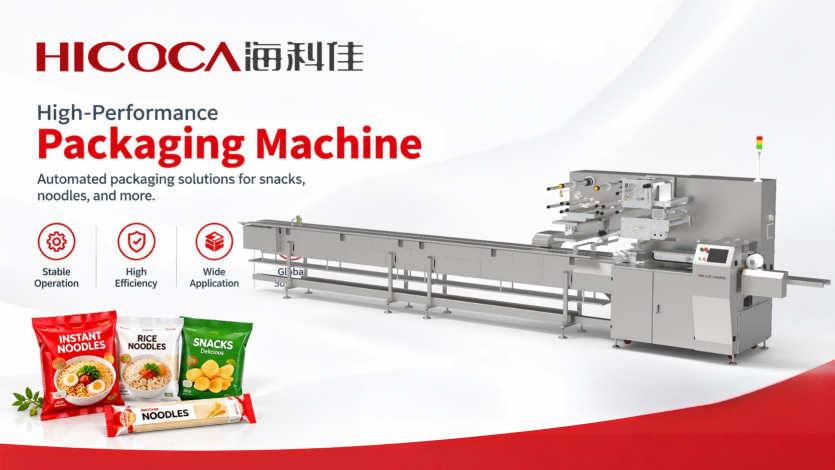
An automatic noodle packing machine is a sequence of stations running on one control system. Depending on the noodle format, the flow looks like this:
Feeding and lifting Elevators or hoppers move product from the cooling conveyor into the weighing system without crushing or tangling it.
Weighing and bundling One or more weighing stations build each portion to the target weight. For stick noodles the portion is then bundled.
Bag forming The portion enters a forming tube made from roll film, or a pre-made pouch.
Sealing and cutting Fin seal plus end seal — closes and separates each bag.
Two details decide the quality of the finished bag more than anything else: how gently the weighing system handles the product, and how consistently the sealing jaws hold temperature and pressure across a full shift. Both show up in your reject rate.
Four configurations, four different noodles
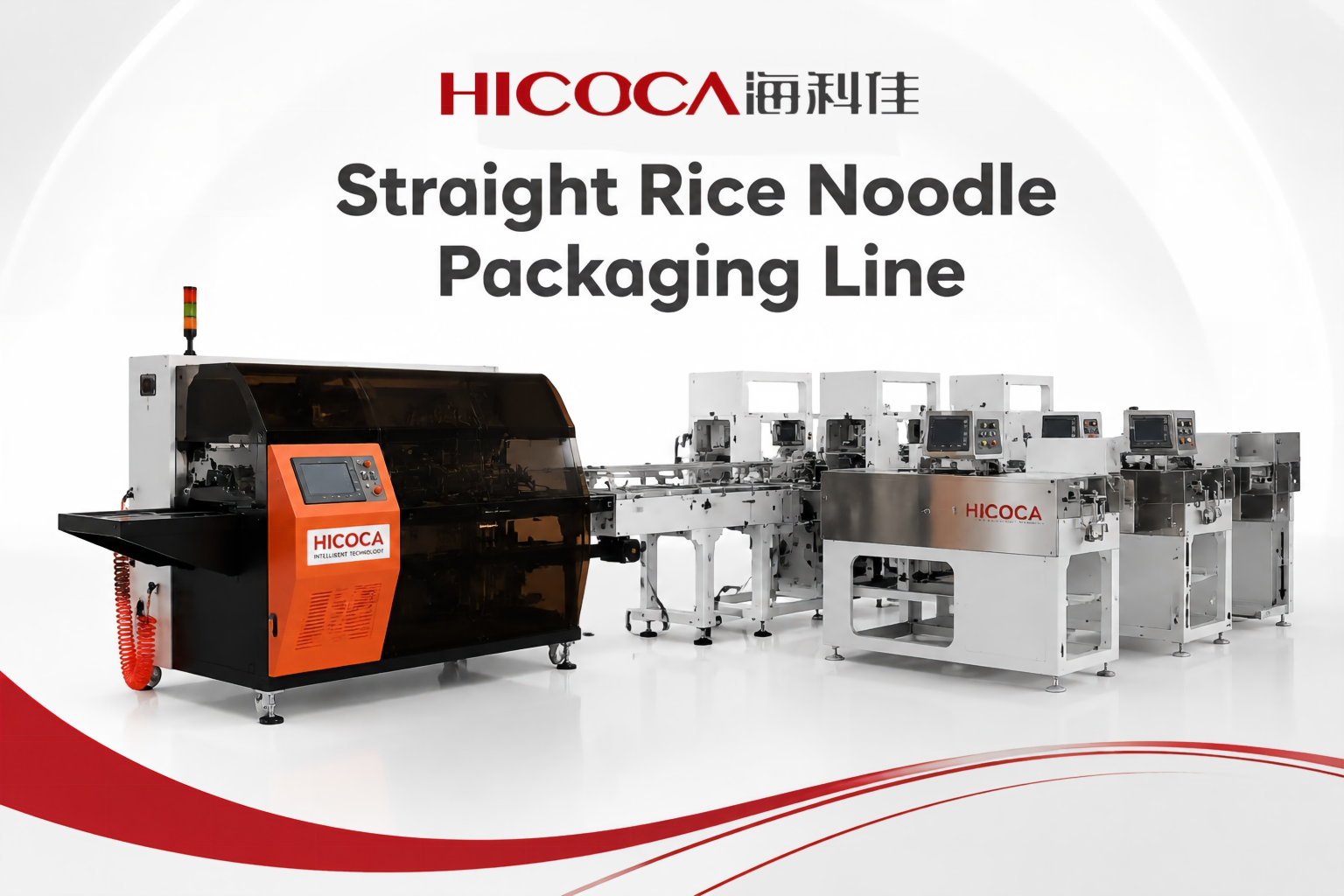
1. Dried stick noodle packing
Dried noodles are long, brittle and light, which is why they are normally bundled before they are packed. The line weighs each portion, bundles the strands, and feeds them into paper or film wrap. A well-built bundle keeps its shape, so the pack survives stacking and long-distance transport instead of arriving as broken strands.
2. Instant noodle packing
Instant noodle blocks run on horizontal flow wrappers in a pillow-bag format. Key extras include:
- Sachet dispenser — places seasoning and oil sachets automatically.
- Film handling — food-grade heat-sealable laminate, typically OPP/CPP.
- Multi-pack handling — five to ten blocks in a family pack.
- Sealing-area hygiene — prevents weak seals from noodle dust.
3. Fresh and wet noodle packing
Fresh noodles are sticky and heavier. Priorities shift to gentle handling, a short product path, hygiene design for quick cleaning, and modified atmosphere or gas flushing options to extend shelf life.
4. Multi-pack, cartoning and palletizing
Full automation means bags flow straight into a case packer and then a robot palletizer, with a checkweigher and metal detector in between.
Buying for a small business, or for a full production line?
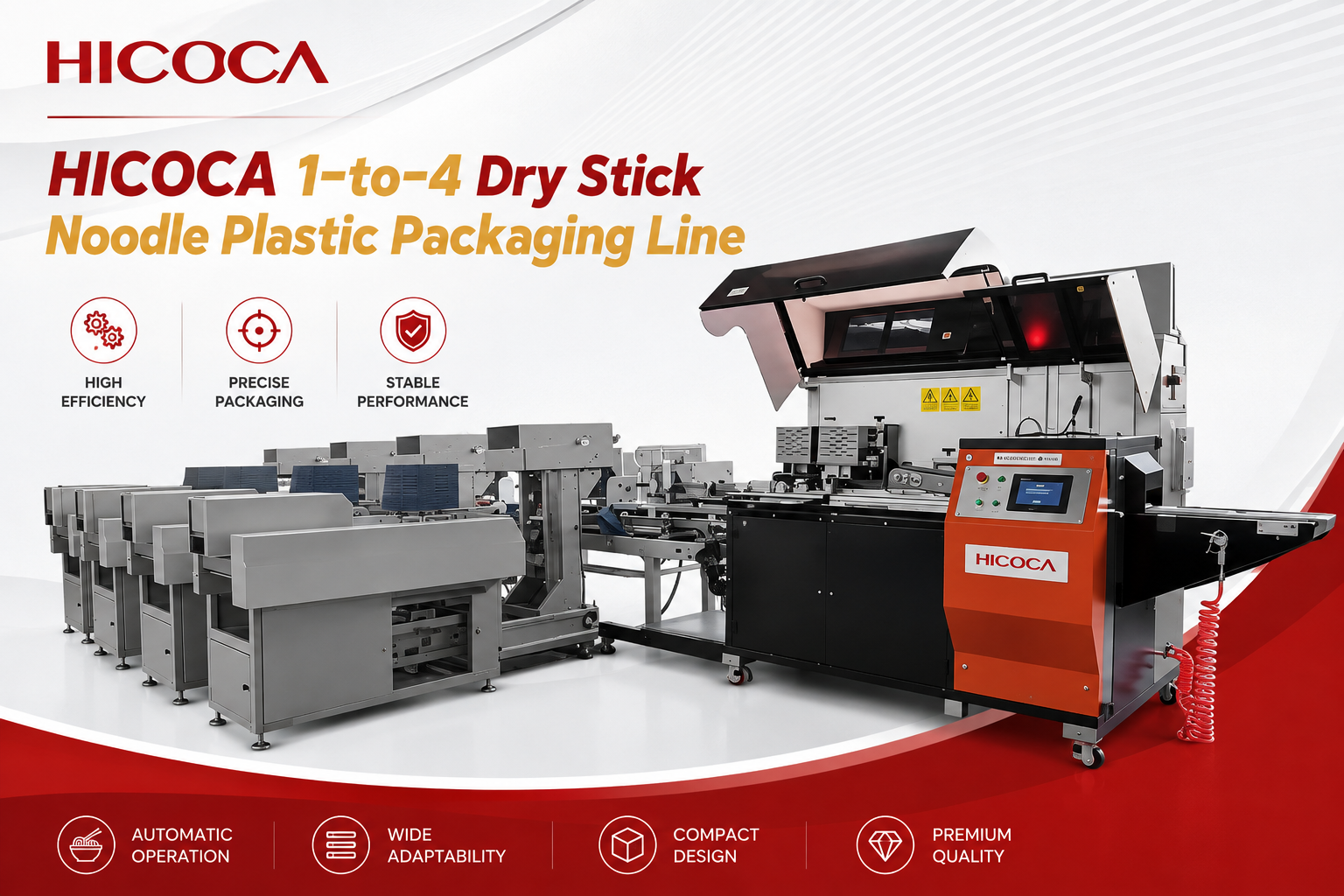
One single-lane automatic weighing and packing unit. Removes heaviest manual work.
Multi-station weighing with bundling, inline coding and a checkweigher. One operator runs the line.
Multi-lane weighing feeding high-speed units, followed by cartoning and palletizing.
Seven specifications to compare
| Specification | What to ask | Why it matters |
|---|---|---|
| Weighing accuracy | “What tolerance do you hold at my target weight?” | Prevents shipment rejection and product give-away. |
| Quoted speed | “How many bags per minute on my bundle weight?” | Real output depends on your specific product geometry. |
| Product geometry | “Which ranges run without change parts?” | Determines how many SKUs one machine can handle. |
| Wrap flexibility | “Can it run paper, OPP/CPP, or pouches?” | Ensures future adaptability for market changes. |
| Changeover time | “How long from SKU A to SKU B?” | Impacts profitability of small promotional orders. |
| Hygiene design | “Which parts are stainless steel?” | Dust build-up is the main cause of weak seals. |
| Integration | “Open PLC? Can it hand-shake with upstream?” | Avoids creating an “expensive manual island.” |
What drives the dried noodle packaging machine price
Most enquiries about dried noodle packaging machine price really come down to five variables: Number of weighing lanes, Servo count, Wrap format, Automation level, and Build standard.
Payback Model Calculation:
- · Operators replaced per shift: [__]
- · Loaded labour cost per operator per year: [__]
- · Average overweight per pack today: [__] g
- · Annual output: [__] packs
Why manufacturers work with HICOCA
HICOCA (Qingdao HICOCA Intelligent Equipment Technology Co., Ltd.) builds intelligent food production and packaging lines. With a manufacturing base of more than 50,000 m², German laser cutting centres, and FANUC robots, HICOCA holds the majority share of the Chinese market and exports to 42 countries.
Frequently asked questions
Post time: Oct-08-2026