
A fried instant noodle production line sounds like one machine. Anyone who has stood on a noodle factory floor knows better. It is a chain of machines that have to agree with each other — the mixer, the sheeter, the steamer, the fryer, the packaging units — all running at the same rhythm. Closing the gap between “a line on paper” and “a line that actually runs” is what this project was about. Here’s how it went, and why it pushed us to build a real presence in Indonesia.
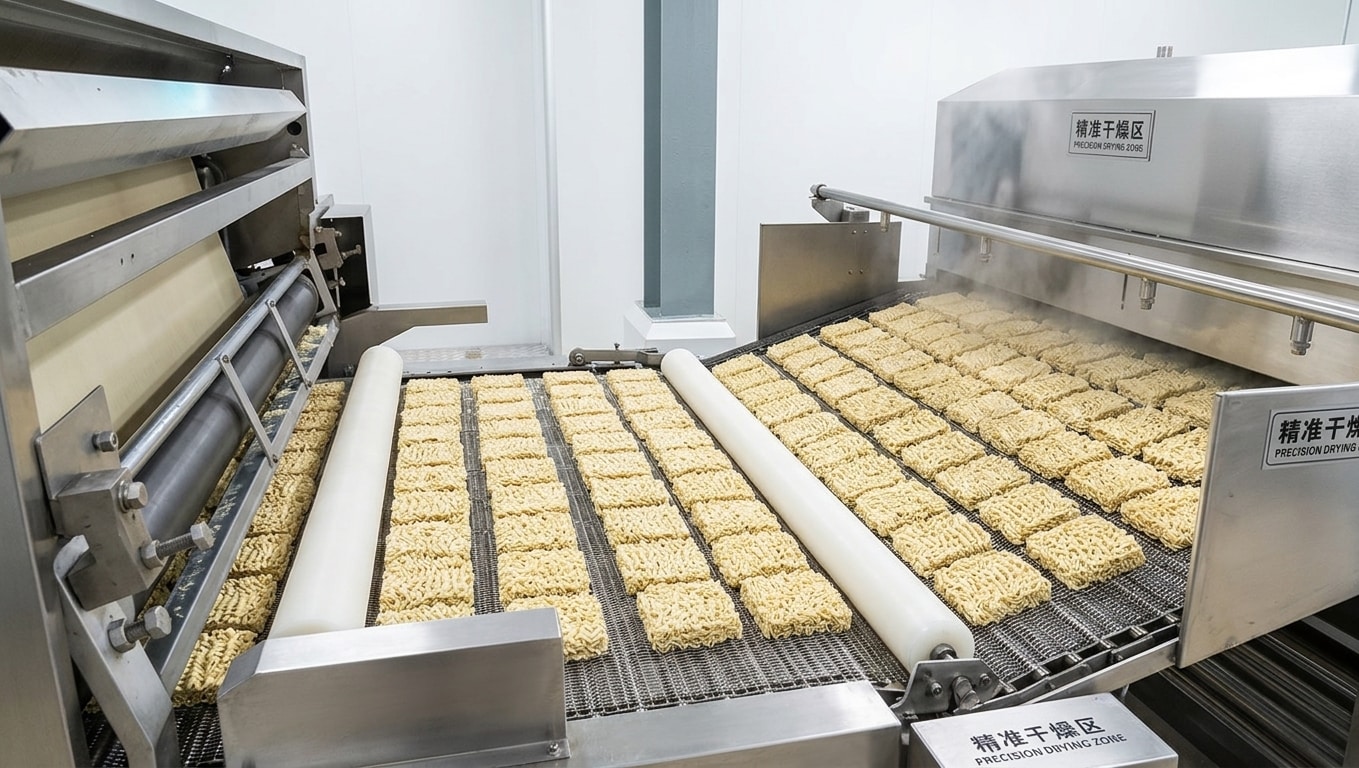
The customer came to us with two problems, not one
Indonesia is one of the largest instant noodle markets in the world, and its consumers are clear about what they want: noodles that are affordable, quick to prepare, and available in the format they happen to need that day — a bag for the family pot, a cup for the desk or the road trip.
For the manufacturers serving that market, this creates a practical challenge. Our customer needed a complete instant noodle production line, from dough mixing all the way to finished packaging. And it had to cover two different products at once: bagged instant noodles and cup noodles.
They could, in theory, have bought a fryer from one supplier and packaging machines from two others. But when equipment comes from different factories, somebody has to make it all work together — and usually, that somebody is the customer. This manufacturer didn’t want that job. Neither would we.
What “complete” actually looked like
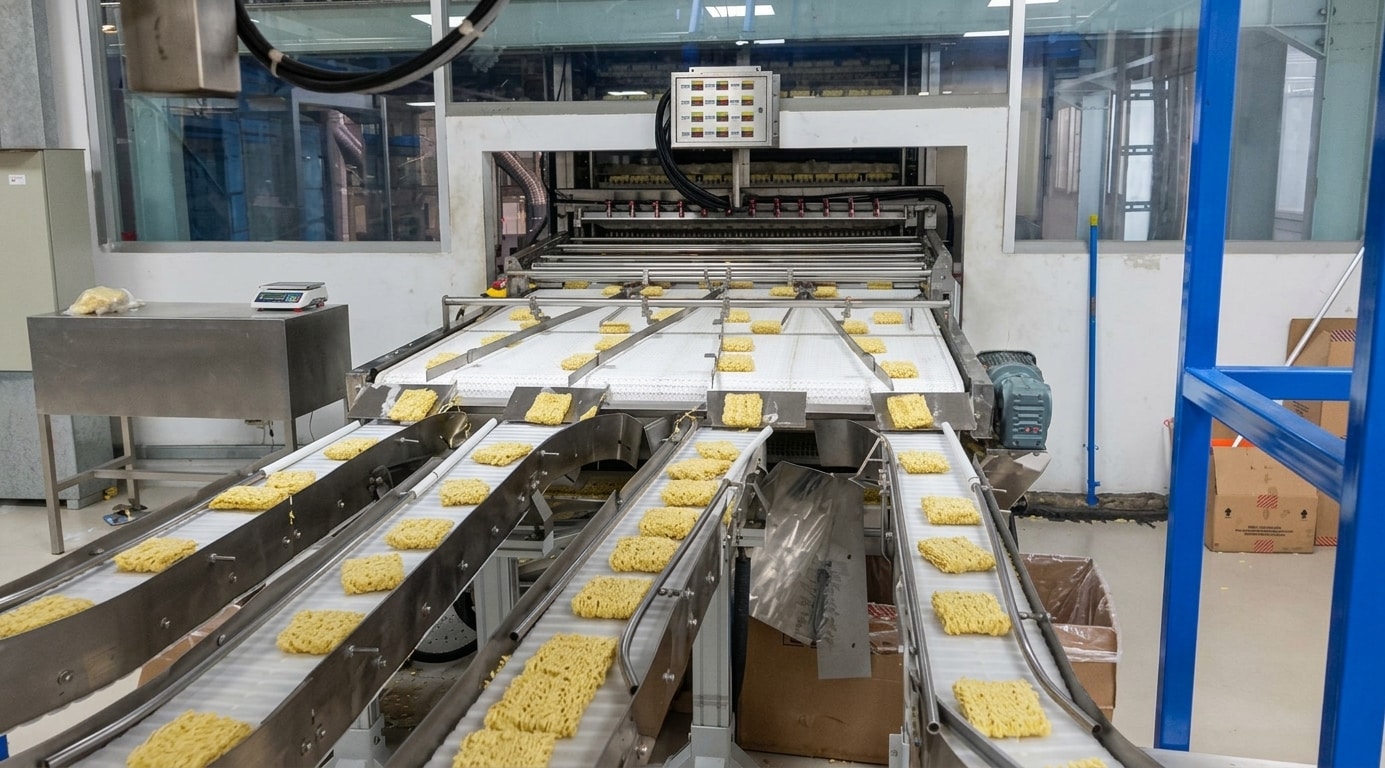
So we scoped a single fried instant noodle production line that carries the product from raw dough to sealed package. Walking the line from start to finish, it looks like this:
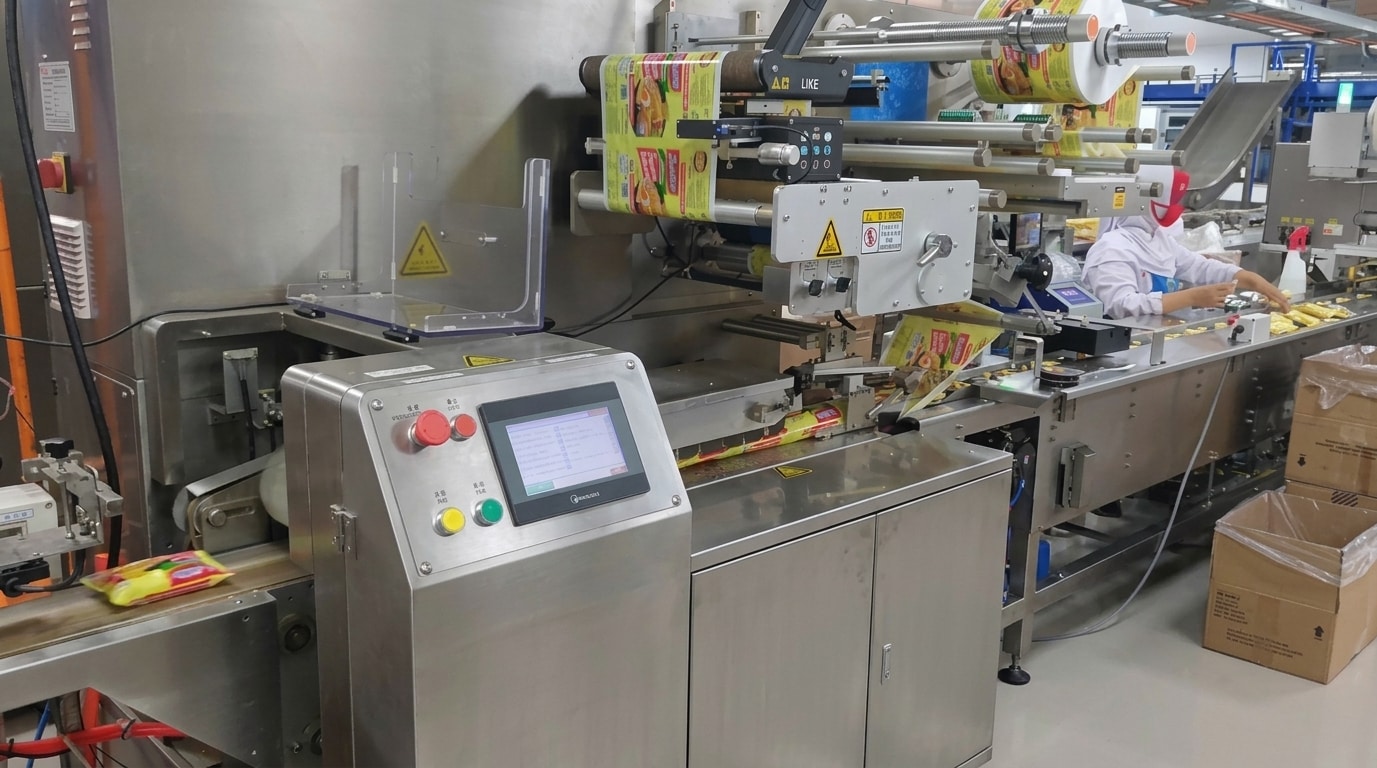
The exact configuration always depends on the customer’s product specifications, target capacity, factory layout, and packaging design. We size the instant noodle packaging machines around the customer’s product — never the other way around. In this project, that meant both the bagged line and the cup noodle line were designed as part of one coordinated system, not two separate purchases bolted together at the end.
That was the real value for the customer: one supplier accountable for the whole flow, from the mixer to the sealing roller.
Why we set up HICOCA Indonesia
Shipping the line is honestly the easier part of this business. A noodle factory runs every day. Rollers wear. Recipes change. A line that sits stopped is losing production hours nobody can get back — and every hour of waiting on a service answer from another time zone makes it worse.
We learned this the way most companies do: by working closely with customers like this one and seeing what happened after delivery. Technical communication is faster and trust builds easier when the people answering your questions are nearby.
That’s why we established HICOCA Indonesia — a local company, close to our Indonesian customers, handling service coordination, technical communication, and long-term cooperation. For anyone in Indonesia considering a new line, it also means you have a local point of contact from the very first conversation about your project, not just after the containers arrive.
Three things this project says about how we work
From dough mixing to final packaging, one team owns the complete instant noodle production line — so coordination problems land on us, not on the customer.
Bagged noodles, cup noodles, or both — the production and packaging equipment gets designed around what you actually sell, and what you plan to sell.
HICOCA Indonesia exists because equipment supply is the beginning of a relationship, not the end of one.
Planning a line of your own?
If you’re an Indonesian food manufacturer planning a new instant noodle factory, expanding an existing facility, or adding a cup noodle production line to a bagged-noodle business, talk to us before the factory layout is finalized. It’s much easier to design the line around your building than to redesign your building around the line.
Contact HICOCA to discuss your requirements for bagged instant noodles, cup noodles, or a complete fried instant noodle production line. With HICOCA Indonesia nearby, we can work through your product requirements, production targets, and packaging needs together — from the first sketch to the first bag off the line.
FAQ
Can one fried instant noodle production line make both bagged and cup noodles?
Yes. The stages up to cooling are shared — dough mixing, sheet forming, steaming, frying, and cooling — while the packaging stage is configured with separate systems for bagged noodles and cup noodles, matched to the customer’s product specifications.
What stages does a complete instant noodle production line cover?
A typical complete line covers dough mixing, noodle sheet preparation and forming, steaming and frying, cooling and handling, and final packaging for the chosen formats.
Does HICOCA provide local support in Indonesia?
Yes. HICOCA Indonesia is our local company in the Indonesian market, providing service coordination, technical communication, and ongoing support to local food manufacturers.
Post time: Nov-05-2026