Fully Automatic Fried Instant Noodles Production Line
Short Description:
Product Name:Fully Automatic Fried Instant Noodles Production Line
Category:Instant Noodle Equipment
Product Model:FYMX-300/450/600/800/1000/1200
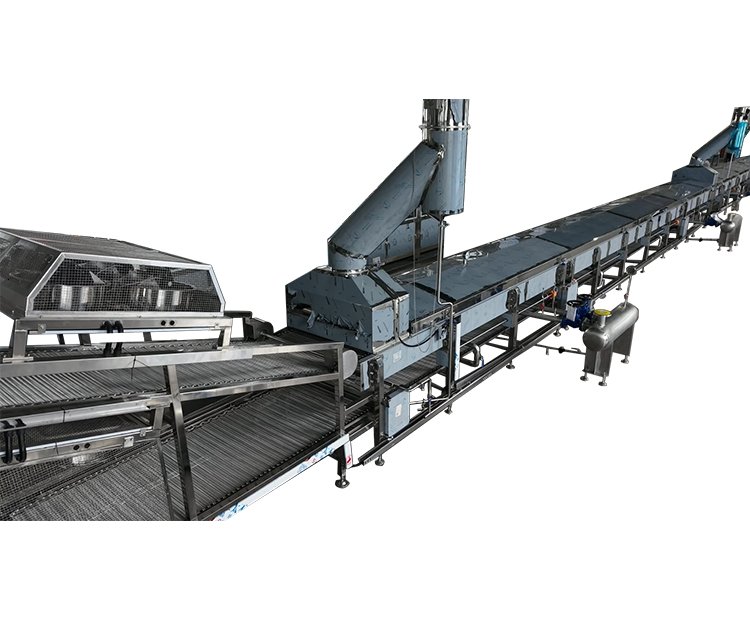
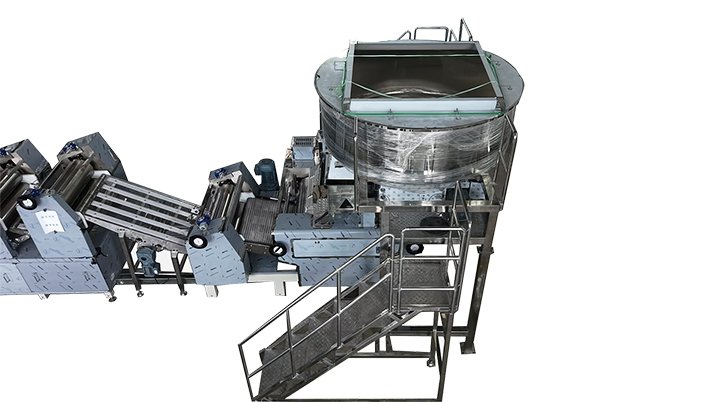
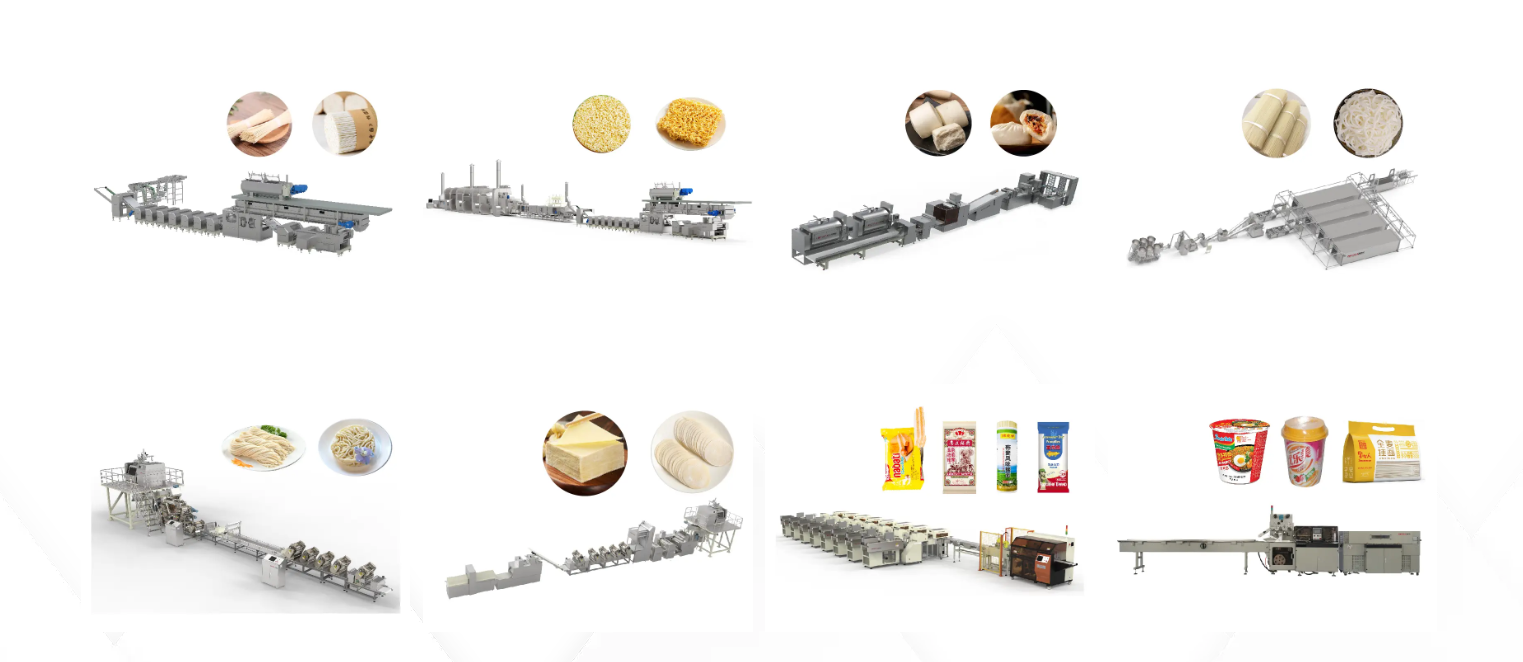
Overview:The Fully Automatic Fried Instant Noodles Production Line is suitable for the fully automated production of fried instant noodles, integrating the dough mixing system, cooking system, composite calendering system, continuous calendering and shredding system, steaming system, frying system, cooling system and packaging system.
Advanced technology, reasonable layout, compact structure, and easy maintenance. Fully intelligent automatic control allows only two people to operate the entire production line.
The industry-leading steaming and starch gelatinization, frying and dehydration, and cooling technologies are used to produce fried instant noodles with good rehydration properties and a smooth and chewy taste.
Product Parameters
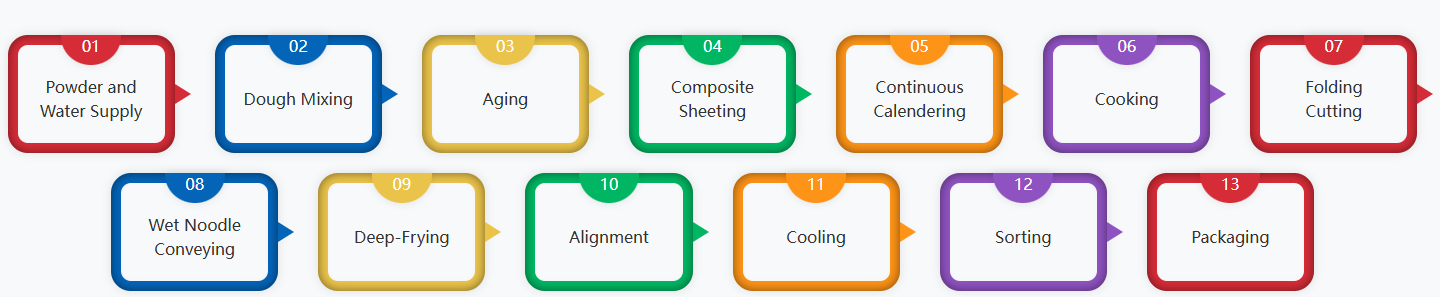
Square Block Process Flow
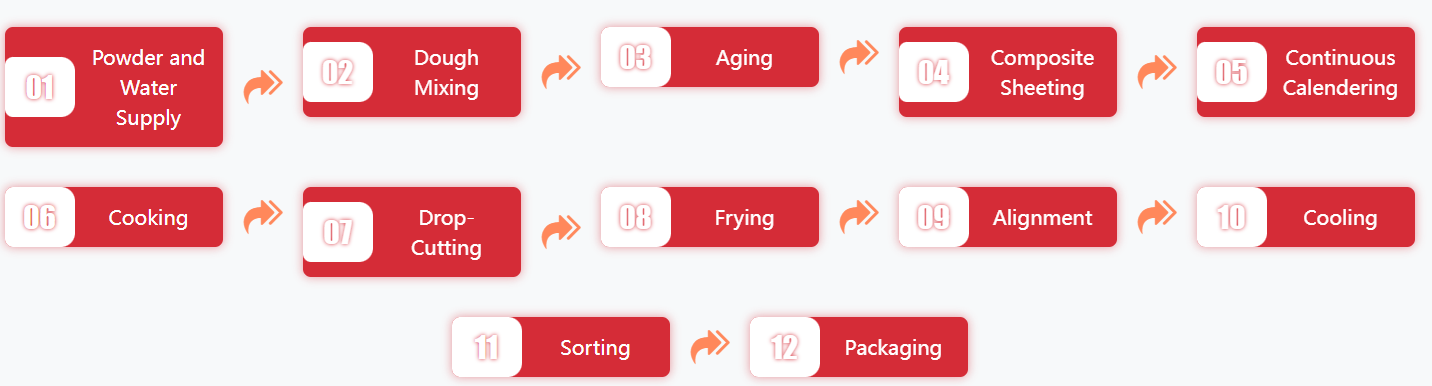
Round Noodle Block Process
Core Stand-Alone Design Introduction
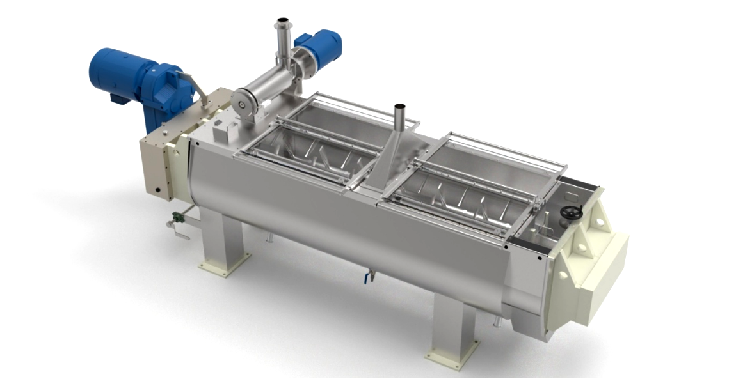
Horizontal Double-Shaft Dough Mixer
◆The batch mixing blades designed with a special angle promote the bidirectional movement of flour, eliminating axial unevenness and significantly improving mixing uniformity.
◆The transmission system adopts a special gear reduction box with gears that have been high-frequency quenched on the tooth surface, and is equipped with complete lubrication and sealing devices to reduce noise, improve transmission efficiency and extend service life.
◆The equipment is equipped with dual safety devices such as timed alarm, emergency stop button, proximity switch, etc. to ensure safe operation.
Disc-Aging-Machine
◆The bottom is equipped with a single-arm agitator, which continuously feeds and conveys the material to ensure uniform tableting.
◆Stand still or stir the dough at low speed to promote water homogenization, eliminate internal stress and optimize the gluten network.
◆Disc design can effectively save space.
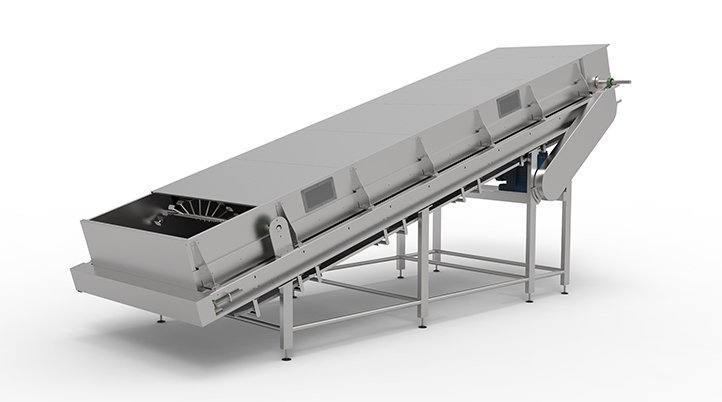
Aging Conveyor
◆The concept of letting the dough rest and rise is introduced into mechanization, and the conveyor belt feeding realizes the first-in-first-out of materials.
◆The fully sealed design avoids water loss, achieves moisturizing and heat preservation, balances the moisture content of the dough, and improves the uniformity of the dough.
◆The breaking mechanism adopts a spiral powder beating rod to ensure uniform feeding of small dough particles and uniform sheeting.
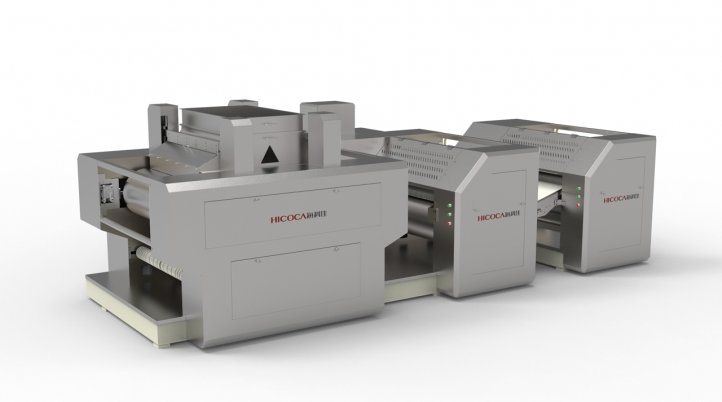
Composite Calender
◆Composite tableting and continuous tableting equipment mainly consists of feeding device, roller, nip adjustment mechanism, scraper, transmission system, etc.
◆The feeding device adopts direct plug-in type or arc plug-in type, which is characterized by forced feeding, good uniformity and easy material feeding.
◆The calendering rollers are made of high-hardness high-chromium alloy steel, which has stronger corrosion resistance and ensures a long service life. The pressed dough is smooth and full. The safety protection device ensures safe use, easy cleaning, convenient observation and easy maintenance.
◆The pressure roller is driven by high-precision gears and is mostly made of alloy steel, which has high strength, hardness and durability.
◆The pressure rollers are made of high chromium alloy casting rollers with high surface finish and high thickness precision of dough sheets. The gap between each pair of pressure rollers is automatically adjusted by servo control.
◆With recipe management, automatic adjustment can be achieved by simply inputting noodle varieties and specifications. At the same time, each pair can also be fine-tuned manually at the same time or one side at a time.
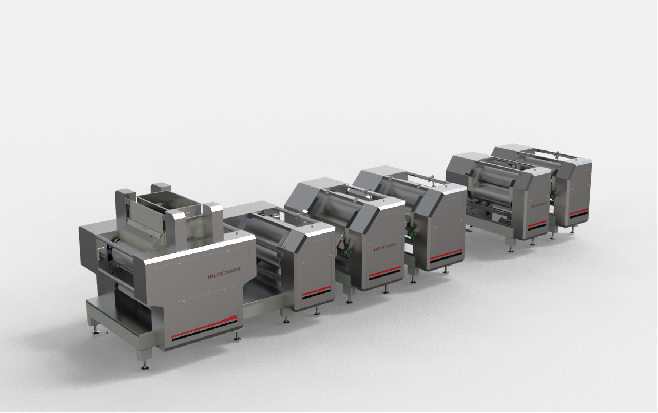
Continuous Calendering Unit
◆Automatic splicing system: The first of its kind in the industry, patented by Haikejia. The splicing belt conveyor automatically rises and falls. Automatic splicing is achieved through precise detection using photoelectric sensors.
◆The scraper is controlled by a cylinder push method, and the pressing force can be adjusted by controlling the cylinder stroke.
◆All rollers adopt independent motor frequency conversion drive, and the roller gap adjustment method is: the gap between each pair of rollers is set by two servo motors at the left and right ends to set the calendering ratio, and the roller spacing is automatically adjusted to achieve one-button control.
◆PLC programming automatically adjusts the tension of the dough belt according to the proportional electric eye detection, ensuring the continuous and uniform operation of the dough belt.
◆Detect bearing temperature in real time and automatically add oil according to the temperature detection conditions.
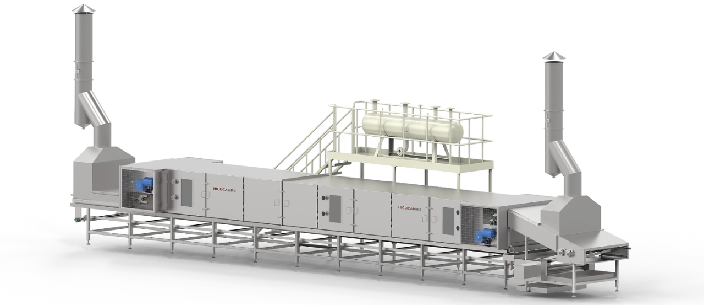
Multi-Layer Steamer
Multi-layer steamer can be divided into three layers or five layers
◆The steamer adopts a multi-layer design to improve the gelatinization degree of the product, while saving space and making the site distribution more reasonable.
◆Air is taken in at three levels, with each level taking in air from the front and back. The air tightness between the upper, middle and lower levels is good. The use of low-pressure steam source can greatly reduce energy consumption (about 350-400Kg of steam is consumed for every 1000Kg of finished product, more than 80%). Cleaning nozzles and lubricating nozzles are installed inside.
◆Inner and outer trawl nets are powered independently, the gap between the trawl net entrance and exit is small, and the steaming net chain is made of food-grade stainless steel.
◆The entrance and exit can be opened for easy cleaning and maintenance.
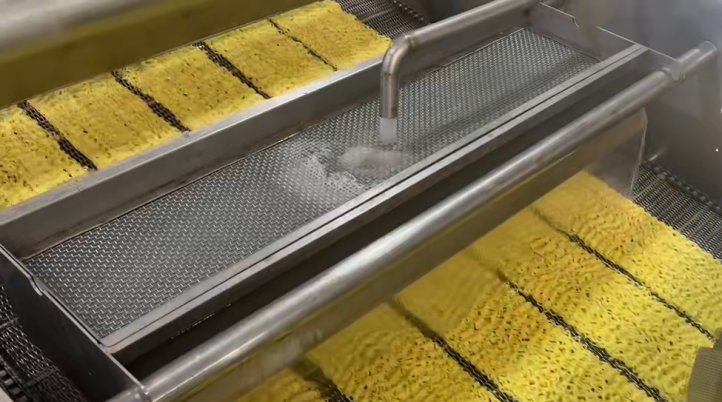
Spray Seasoning Machine
◆Use oil/soup/water spraying technology to make the noodles form a three-dimensional flavor layer.
◆The spraying process is fast, the production efficiency is high, and it is suitable for high-speed production lines.
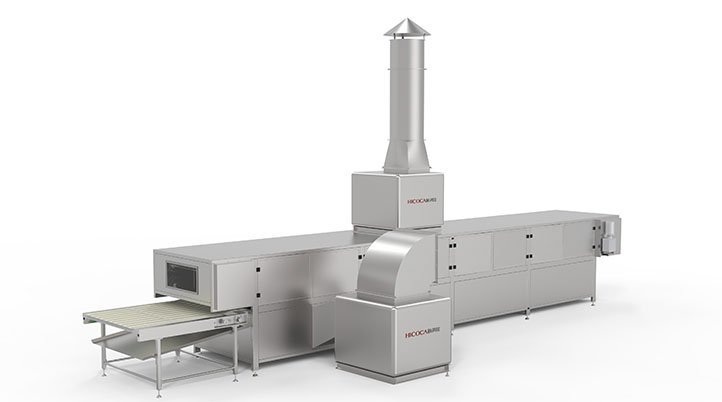
Cooler (horizontal)
◆Neatly arranged rows with consistent spacing.
◆Teflon guide strips ensure the dough is free of contamination and black spots, ensuring safety and hygiene, and making cleaning easier.
◆Downward-blowing, upward-draft forced exhaust cooling provides effective cooling, forcing hot air out of the workshop, improving the workshop environment.