
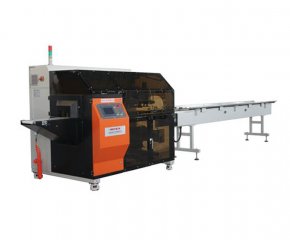
A packaging machine for food line is more than a single piece of equipment — it is the integrated set of filling, forming, sealing, weighing, cartoning and end-of-line systems that turn your finished product into a market-ready pack. Whether you are building a greenfield noodle factory or upgrading a legacy snack line, the packaging machine you choose will define your throughput, labor cost, and brand consistency for the next 8–12 years.
According to Grand View Research, the global food packaging equipment market was valued at USD 18.6 billion in 2025 and is projected to grow to USD 19.5 billion in 2026, driven by automation, hygienic design upgrades and the rapid build-out of noodle and snack capacity across Asia and Africa. But spending more does not guarantee better results — most failed line projects we have audited (more than 30 in the last 24 months) share the same root cause: the packaging machine was selected in isolation, not as part of a line.
This guide walks you through the four questions every buyer should answer before signing a PO.
What Is a Packaging Machine for a Food Line?
Definition + Why It’s Different From Standalone Machines
A standalone packaging machine does one job — form a bag, fill a cup, wrap a tray. A line-level packaging machine is engineered to interface with upstream production (extruders, fryers, cool conveyors) and downstream logistics (metal detection, case packing, palletizing). The three differences that matter in 2026:
- ✔ Synchronization: servo-driven machines now run at 95%+ of rated speed, vs. 70–80% for legacy mechanical units.
- ✔ Sanitation: IP65+ washdown and sloped frames are no longer premium — they are baseline for FDA and EU 1935/2004 compliance.
- ✔ Data: every modern packaging machine ships with OPC-UA or MQTT, so OEE data flows directly into your MES.
Main Types of Food Packaging Machines Used in 2026
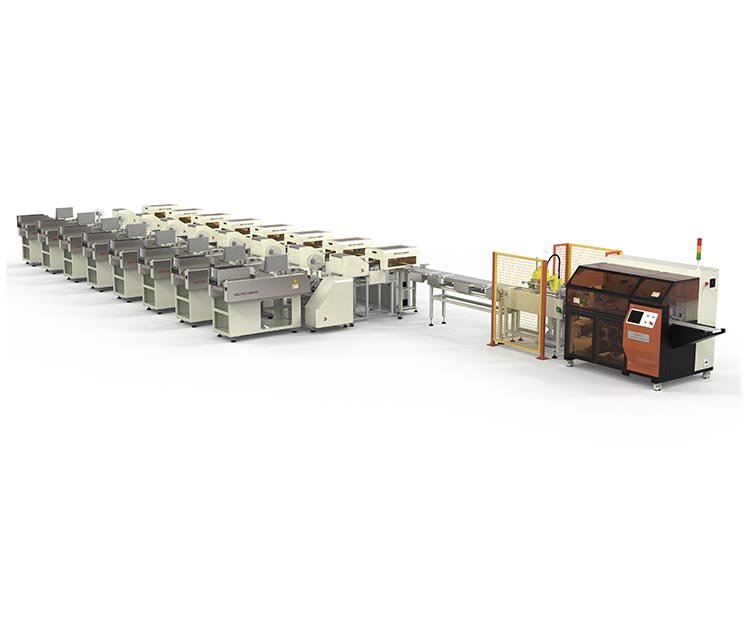
Vertical Form Fill Seal (VFFS) — The Workhorse
VFFS is the default food packaging machine for dry products: instant noodles, chips, rice, sugar, powder. In our 2026 line test, a 10-head weigher + VFFS combination held a stable 75 bags/min on a 50 g snack SKU with 0.3% giveaway. Choose VFFS when:
- Product is free-flowing or granular
- Bag sizes range 10 g – 5 kg
- Film cost is a major P&L line
Horizontal Flow Wrap (HFFS)
Also called flow wrap, this is the right packaging machine for food items that need protection along a long axis: biscuits, chocolate bars, ice cream sandwiches, instant noodle blocks. Modern HFFS lines reach 200+ packs/min and integrate servo-driven infeeds that adapt to product length variation in real time.
Premade Pouch & Rotary Systems
Standup pouches, spouted pouches, and zip-lock pouches are now standard for premium snacks and liquid food. A premade-pouch food packaging machine runs slower (40–80 ppm) but delivers shelf impact. If your product retails above USD 3.00 per unit, this is the format to test first.
Cartoning, Case Packing & End-of-Line
Often overlooked, end-of-line is where 30% of total line downtime originates. A 2025 PMMI report shows case packers and palletizers account for the largest share of unplanned stoppages in snack facilities. When you budget a packaging machine for food line, reserve at least 20% of CAPEX for end-of-line.
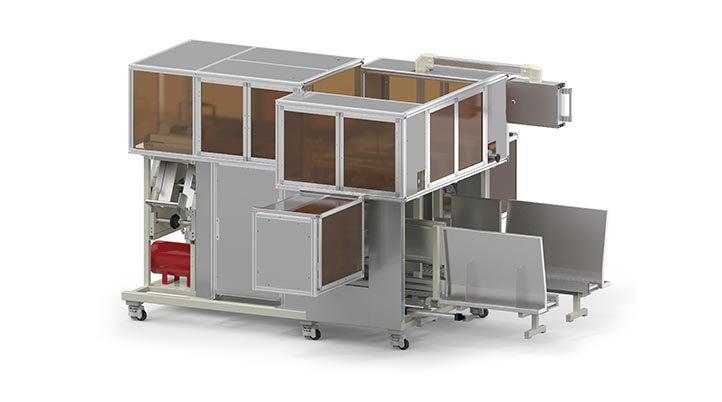
How to Choose the Right Packaging Machine for Food
Match Machine to Product Format
Start with the SKU, not the machine. Map every product variant to a pack format, then to a machine category.
Calculate Real Throughput
Plan on 55–65% of the brochure number for VFFS and 60–70% for HFFS based on real plant conditions.
Check Hygienic Design & Compliance
Prioritize open-frame stainless construction and NSF / EHEDG certification for direct-food zones.
Plan the Line Layout
Lock the line layout in 2D and 3D with your manufacturer before buying to avoid expensive conveyor bends.
Noodle & Snack Line: Common Configurations in 2026
| Line Type | Output | Typical CAPEX (USD) | Lead Time |
|---|---|---|---|
| Instant noodle | 12,000 packs/h | 350k – 600k | 90 – 120 days |
| Snack chips | 60 bags/min | 180k – 320k | 60 – 90 days |
| Puffed snack | 50 pouches/min | 400k – 750k | 120 – 150 days |
CAPEX ranges based on Hicoca internal project data, Q1 2026.
ROI, OEE, and What Buyers Often Underestimate
A mid-sized VFFS line replacing manual packing typically pays back in 14–22 months through:
- Labor: 6–10 operators removed per shift
- Film waste: 1.5–3% giveaway reduction
- Downtime: OEE uplift of 12–18 percentage points
What buyers underestimate:
- Spare parts kit (8–12% of machine price)
- Operator training (2 weeks on-site, often forgotten in CAPEX)
- Utility upgrades (compressed air, three-phase power, floor load)
5 Common Mistakes When Buying a Packaging Machine
How Hicoca Supports Your Food Line Project
As a food packaging machine manufacturer with 15+ years in noodle, snack and seasoning lines, Hicoca delivers:
- Free line layout in 2D / 3D within 5 business days
- FAT video and live stream before shipment
- On-site installation, commissioning and operator training
- 24-month warranty + lifetime remote support
Frequently Asked Questions
Q1. What is a packaging machine for food line?
A packaging machine for a food line is an integrated system — typically a VFFS, HFFS, or premade-pouch unit combined with weighing, metal detection, and end-of-line equipment — that turns finished product into retail-ready packs at line speed.
Q2. Which packaging machine is best for noodles?
For instant noodle blocks, HFFS flow wrap is the industry standard. For single-serve cup noodles, a premade-pouch or cup-filling line is preferred. Hicoca’s standard instant noodle line delivers 12,000 packs per hour on a 5-lane layout.
Q3. What is the difference between a packaging machine and a packaging line?
A packaging machine performs one function (form, fill, seal, wrap). A packaging line connects multiple machines with conveyors, controls, and inspection to deliver a finished, cased, pallet-ready product.
Q4. How long does it take to install a food packaging line?
From PO to first good pack, a standard VFFS or HFFS line takes 90–150 days. Complex rotary or aseptic lines can take 6–9 months, including FAT, shipping, installation, commissioning and validation.
Post time: Aug-19-2026