Intelligent Commercial Udon Noodle Maker
Knead the dough like you would by hand, mixing thoroughly and blending the dough with water.
A double resting process lasting up to 10 hours stimulates the egg whites and revitalizes the dough.
Five levels of pressure adjustment and overlapping presses develop a dense and resilient gluten network.
12-stage intelligent bionic rolling machine prevents gluten breakdown, repeatedly rolling the dough vertically and horizontally for a smooth, chewy texture.
One-touch settings ensure uniform cuts with adjustable width, allowing you to create a variety of noodle shapes, including plain noodles, udon noodles, sliced noodles, and stewed noodles.
Product Parameters
| Production Speed | Dough Pot Capacity | Machine Quality | Power | Dimensions | Power Supply |
|---|---|---|---|---|---|
| 250-300 copies/hour | 12.5 kg/pot | 470kg | 1.5Kw | W1335×D880×H1365(mm) | 220v 50Hz |
Process

Features

Core Stand-Alone Design Introduction
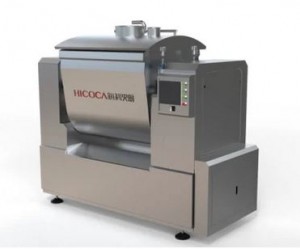
1 Dough Kneading Device
The mechanical design emulates manual labor. During the kneading process, the stirring rods are constructed like fingers, creating a stirring motion similar to that of a human hand, enabling quick and even mixing, ensuring thorough blending of the water and dough.
The kneading process takes 5 minutes, with each batch of 15 kg of dough kneaded. Water is added in two steps. The first step involves stirring for 3 minutes, allowing the flour and solution to combine and begin to form gluten.
After the second step, small particles begin to coalesce and grow larger. The stirring time during this stage is 2 minutes. This prevents damage to the dough and ensures that the dough remains loose, uniform in size and color, and has sufficient elasticity to form a ball when held and gently kneaded.
2 Let The Dough Rise
Resting the dough is a crucial step in the production of fresh noodles. We rest the dough twice, both in bulk and in blocks, using a constant temperature and humidity chamber for at least eight hours. This process allows the water and flour to better combine, allowing the dough to release air, relieving gluten pressure and activating enzymes. Measurements of the noodles after this second resting process show improvements in firmness, elasticity, and chewiness, significantly enhancing the noodles’ texture.
3 Pressed Noodles
The dough pressing device recreates the perfect strength of traditional hand-kneading. The rested dough is placed into the device and pressed. After the first pressing, the dough is folded in half, rotated 90 degrees, and pressed again, repeating this process five times.
This stage strengthens the gluten tissue, forming a strong network. Too little pressing results in an incomplete gluten structure. Too much, however, can damage the gluten. Therefore, the dough pressing device effectively forms a tight network, resulting in a chewier noodle texture.
4 Roll Out The Noodles
Rolling the dough involves gradually rolling it at a controlled speed, while ensuring the gluten structure is not damaged. The optimal rolling effect is achieved by adjusting the appropriate rolling pressure based on the dough’s condition, temperature, and water addition ratio.
The Bionic Udon Noodle Machine is equipped with a 12-speed shift mechanism, which adjusts the roller width in stages, gradually thinning the dough by alternating vertical and horizontal directions. This process ensures more even moisture distribution in the dough and a tighter gluten network, laying the foundation for a superior texture.
In addition, a measuring instrument monitors the dough’s thickness in real time, ensuring a uniform thickness during fresh production with a more intelligent approach.
5 Sections
Even the best dough won’t produce delicious noodles if the final cutting process isn’t handled properly. The thickness and aspect ratio of the noodles are crucial to their appearance after cooking.
The automatic noodle cutting device eliminates the need for intuition and experience when cutting noodles. The width of the cut noodles can be adjusted flexibly between 1 and 40 mm, ensuring that the noodles fully absorb the soup, resulting in delicious, fresh noodles that fully meet consumer demand.
Honors And Qualifications