
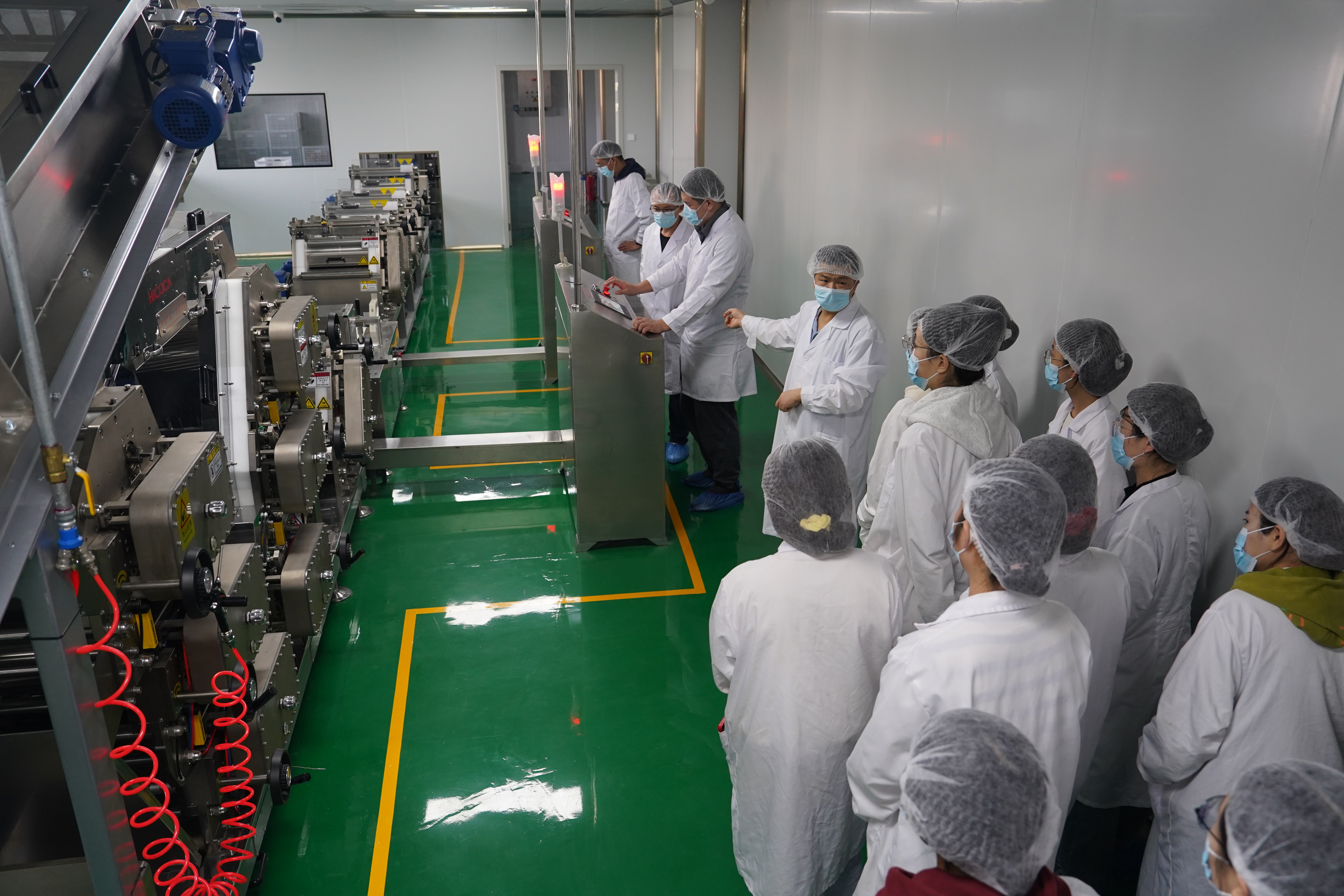
China’s staple food industry—encompassing rice and flour-based products—currently faces a triple bottleneck: low efficiency in manual production, compromised quality during scaling, and a sluggish pace of intelligent transformation. Qingdao Haikejia is breaking this impasse through intelligent equipment spanning the entire industrial chain. By establishing a matrix of seven major production lines—covering dried noodles, instant noodles, rice noodles, central kitchens, fresh/wet noodles, hand-stretched noodles, and intelligent packaging—the company delivers comprehensive, standardized, intelligent, and eco-friendly solutions to the industry.
Industry Pain Points and Haikejia’s Solutions
As a benchmark enterprise for domestic intelligent equipment, Haikejia leverages over 400 patents and world-leading technologies to drive China’s staple food industry forward—transitioning it from mere “manufacturing” to true “intelligent manufacturing.” With products distributed across 42 countries worldwide, the company has emerged as a pivotal force propelling China’s food industry onto the global stage.
Post time: Apr-17-2026